

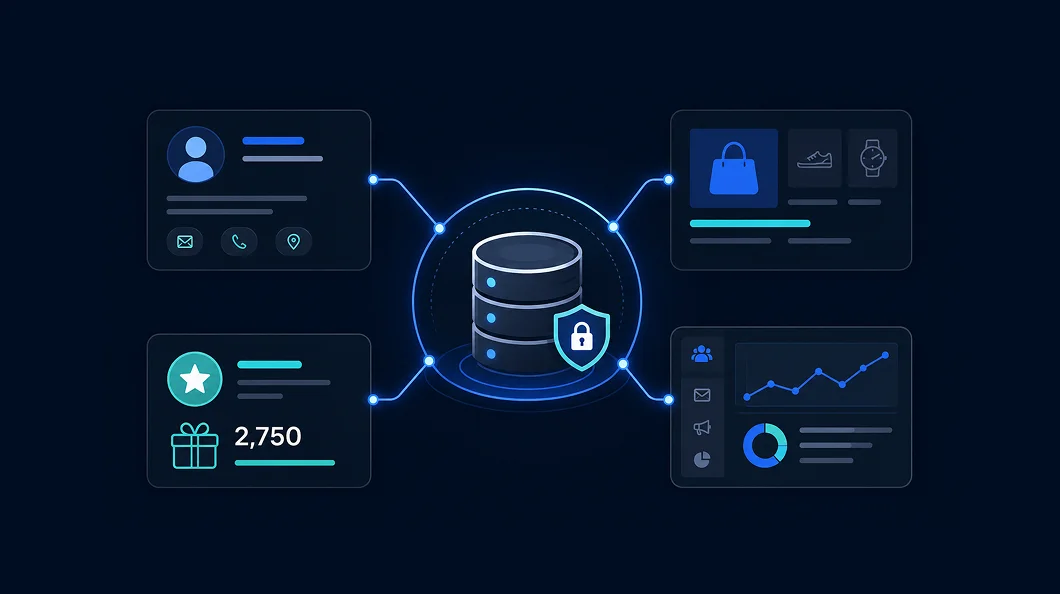
Customers expect brands to understand who they are, what they prefer, and how they have interacted in the past. They want relevant offers, timely communication, and loyalty experiences that feel consistent across every channel.
But personalization and loyalty do not work well when customer data is scattered across disconnected systems.
In this blog post, we’ll explore how first-party data infrastructure helps businesses collect, connect, and activate customer data more effectively. You’ll also learn why a strong data foundation is essential for personalization, loyalty programs, campaign execution, and long-term customer engagement.
Let’s get into it!
Why First-Party Data Infrastructure Matters
First-party data is the information a business collects directly from its own customers and audiences. This may include website behavior, purchase history, loyalty activity, CRM records, email engagement, support interactions, preference data, and transaction details.
This data is valuable because it comes from direct customer relationships. But value depends on usability. If first-party data is stored in separate systems and cannot move where it is needed, marketing teams cannot use it effectively.
Strong customer data infrastructure helps businesses:
- Build more complete customer profiles
- Personalize offers, content, and recommendations
- Improve loyalty program engagement
- Reduce manual data preparation
- Support better segmentation and targeting
- Measure campaign and loyalty performance more clearly
- Respond faster to customer behavior
The goal is not simply to collect more data. The goal is to make customer data accurate, connected, secure, and actionable.
[Also Read: Designing a Scalable Customer Engagement Platform for Modern Businesses]
How First-Party Data Benefits Modern Businesses
Here’s how first-party data helps businesses improve personalization strategies, resulting in strong customer relationships.
It Creates a Unified Customer View
Personalization starts with knowing the customer. But many businesses have customer data spread across CRM systems, loyalty platforms, e-commerce tools, analytics platforms, and customer service systems.
When these systems do not connect, a customer may appear as several different records. Marketing teams may see email engagement but not recent purchases. Loyalty teams may see points activity but not support history. Campaign platforms may not know a customer’s current membership tier.
First-party data infrastructure helps connect these records into a more complete customer view.
This does not always mean putting all data into one platform. It means creating reliable connections between systems so each team can access the information needed for better decisions and experiences.
How it supports personalization and loyalty:
- Helps identify the same customer across different channels and touchpoints
- Enables more accurate segmentation based on behavior, value, preferences, and status
- Gives teams a clearer view of customer history before launching campaigns
- Reduces duplicate, outdated, or conflicting customer records
It Makes Personalization More Relevant
Personalization is only useful when it is based on current and accurate data. A customer who just made a purchase should not receive a generic reminder to buy the same product. A loyalty member who recently redeemed a reward should not receive an offer that no longer applies.
When data is delayed or disconnected, personalization can feel random or even frustrating. Strong first-party data infrastructure solves this by helping systems share timely customer signals.
How it supports personalization and loyalty:
- Uses recent customer actions to trigger relevant messages
- Helps deliver loyalty-based offers across email, web, app, and service channels
- Reduces irrelevant or repeated promotions
- Supports personalized content based on customer preferences and behavior
- Improves the timing of campaigns by responding to real customer activity
It Strengthens Loyalty Program Experiences
Loyalty programs depend on accurate and connected data. Customers expect points, rewards, status, and benefits to reflect their latest activity. If loyalty data is delayed, incomplete, or inconsistent, trust can quickly decline.
First-party data infrastructure supports loyalty by connecting member activity with transaction systems, campaign platforms, customer profiles, and analytics tools. This allows businesses to create loyalty experiences that feel consistent and reliable.
For example, when a customer completes a purchase, the loyalty platform should receive the transaction details. The customer should see updated points. The campaign platform should know whether a follow-up offer is appropriate. Analytics should capture the behavior for future reporting.
How it supports personalization and loyalty:
- Keeps points, rewards, and tier data more accurate across systems
- Connects loyalty behavior with customer profiles and campaign activity
- Helps teams personalize rewards based on purchase history and engagement
- Supports real-time or near-real-time loyalty updates
- Improves customer trust by reducing errors and delays
[Also Read: How to Integrate Loyalty Programs Across Omnichannel Touchpoints]
It Helps Marketing Teams Act Faster
Even when businesses have valuable first-party data, marketing teams often struggle to use it quickly. They may need to request data from IT, wait for manual exports, clean spreadsheets, or reconcile records before launching a campaign.
This slows campaign execution and limits experimentation.
Customer data infrastructure helps reduce these operational bottlenecks. By connecting systems and standardizing data flows, teams can create segments, launch campaigns, and measure outcomes with less manual effort.
This is especially important for loyalty and retention campaigns, where timing matters. A delayed response can mean missing the moment when a customer is most likely to engage.
How it supports personalization and loyalty:
- Makes customer segments easier to build and refresh
- Reduces manual list uploads and data cleanup
- Helps campaign platforms access approved customer data directly
- Supports faster testing of loyalty offers and personalized messages
- Allows teams to respond more quickly to behavior changes
It Improves Measurement and Decision-Making
Personalization and loyalty strategies need clear insights. Marketing leaders need to know which campaigns drive engagement, which loyalty offers increase retention, and which customer segments create the most value.
The right data infrastructure helps bring these signals together for better reporting. It creates a more reliable foundation for understanding performance across the customer journey.
How it supports personalization and loyalty:
- Connects loyalty, campaign, revenue, and engagement data
- Helps measure offer performance and redemption behavior
- Supports clearer reporting on customer lifetime value and retention
- Gives leadership more confidence in marketing performance data
- Helps teams improve future campaigns based on real outcomes
It Supports Privacy-Aware Marketing
As privacy expectations grow, businesses need to manage customer data responsibly. First-party data can be powerful, but it must be collected, stored, and activated with proper controls.
Good infrastructure helps businesses manage consent, preferences, access permissions, and data governance. It also reduces unnecessary data movement by making sure systems only receive the information they need.
This is important for both compliance and customer trust.
How it supports personalization and loyalty:
- Connects consent and preference data with marketing systems
- Helps teams respect opt-ins, opt-outs, and communication choices
- Limits access to sensitive customer information
- Creates clearer audit trails for data usage
- Supports more responsible personalization practices
Why Businesses Need a Connected Data Foundation
Personalization and loyalty often fail because the strategy is ahead of the infrastructure. A business may want real-time offers, advanced segmentation, personalized rewards, or lifecycle campaigns, but disconnected systems make those goals difficult to execute.
A connected first-party data foundation helps close that gap.
Instead of replacing every platform, businesses can often improve performance by connecting the systems they already use. APIs, integrations, data models, and workflow automation can help CRM, CMS, loyalty, campaign, and analytics tools operate together.
Final Thoughts
First-party data is one of the most valuable assets a business has, but it only creates impact when it is connected and usable.
Strong first-party data infrastructure helps businesses build better customer profiles, personalize experiences, strengthen loyalty programs, improve campaign speed, and measure performance more clearly. It gives marketing teams the foundation they need to act on customer data with confidence.
For businesses focused on personalization and loyalty, the priority should not only be collecting more data. It should be building the infrastructure that turns that data into relevant, timely, and trustworthy customer experiences.
[Also Read: How API Integrations Support Travel Technology Platforms]